
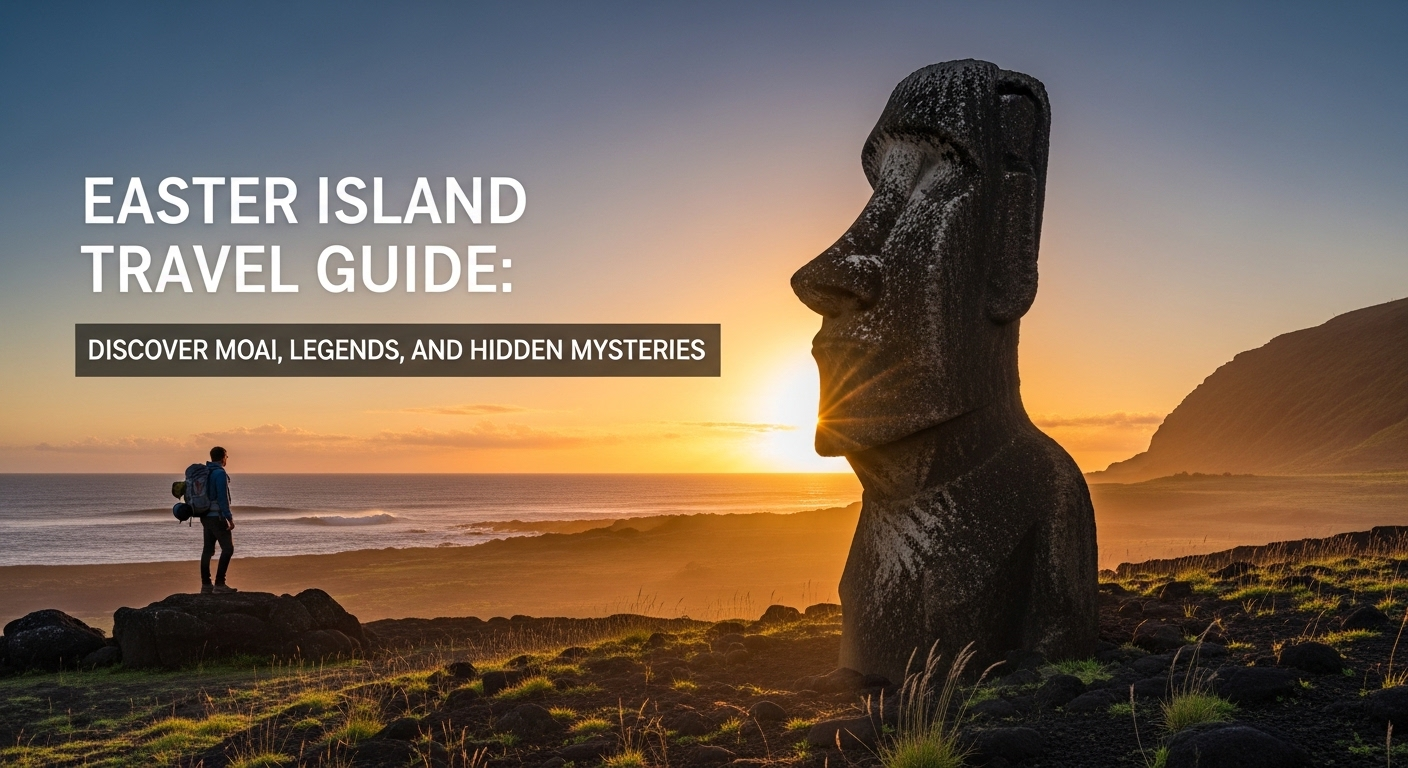
Easter Island Travel Guide
If you’ve ever dreamed of traveling somewhere that feels almost mythical, this Easter Island travel guide might be exactly what you need. Easter Island sits alone in the Pacific Ocean, thousands of miles from the nearest continent, quietly guarding stories carved in stone and whispered by the wind. The first time I learned about the moai statues of Easter Island, I honestly thought they were fictional — like something from an adventure movie. But they’re real, and seeing them in person changes something in you.
This Easter island travel guide isn’t just about planning a trip; it’s about understanding a place that feels suspended between history and mystery.
Where Exactly Is Easter Island?
Part of Chile yet culturally Polynesian, Easter Island — also known as Rapa Nui — is one of the most remote inhabited islands in the world. Planning Rapa Nui travel requires intention, patience, and curiosity. Flights usually depart from Santiago, making it a unique highlight of Chile island travel experiences.
Reading an Easter Island travel guide before visiting helps you understand how isolation shaped the island’s traditions, architecture, and way of life. You don’t just arrive here — you arrive with purpose.
The Magic of the Moai
Let’s talk about the giants. The moai statues of Easter Island are the island’s most iconic symbols. Standing tall along coastlines and volcanic slopes, these massive stone figures represent ancestral guardians. No photograph truly captures their presence. You stand there thinking, How did people move these? Why were they built?
Questions like these are why every easter island travel guide eventually becomes a story about curiosity.
Archaeologists believe the statues were carved from volcanic rock at Rano Raraku quarry. Nearly 900 moai exist across the island, each slightly different, each quietly watching the horizon.
And yes — the Easter island mysteries surrounding them remain unsolved in many ways.
Easter Island History That Still Breathes
Understanding Easter Island history makes the landscape feel alive. Polynesian settlers arrived around 1200 CE, creating a sophisticated society deeply connected to nature and spirituality. Over time, environmental challenges and internal conflicts reshaped life on the island.
Walking across ancient ceremonial platforms called ahu, you realize this isn’t just archaeology — it’s memory. Every good Easter Island travel guide reminds travelers to respect these sacred places.
Local Rapa Nui culture continues to thrive today through dance, music, language, and storytelling. During festivals like Tapati, traditions come alive in ways that feel both ancient and joyful.
Places That Stay With You Forever
When exploring places to visit Easter Island, you’ll quickly notice that the island feels small yet emotionally vast. Every road leads somewhere unforgettable.
1. Ahu Tongariki
Fifteen moai stand in a dramatic row facing inland. Sunrise here feels spiritual. A solid Easter Island travel guide will always recommend arriving early, when the sky turns orange behind the statues.
2. Rano Raraku Quarry
This volcanic crater is where most statues were carved. Hundreds of unfinished moai remain embedded in the hillside. Among all Easter Island attractions, this one feels like stepping into history mid-sentence.
3. Anakena Beach
White sand and palm trees surprise many visitors. It’s the perfect place to rest during Rapa Nui travel, blending natural beauty with archaeological significance.
Exploring these places to visit Easter Island makes you realize the island isn’t defined by a single landmark — it’s an open-air museum.
Living the Island Rhythm
One thing this Easter Island travel guide can’t fully prepare you for is the pace of life. Things move slower here. Shops close early. Conversations last longer. Time feels softer.
You might rent a bicycle or jeep to explore. Or just walk. Honestly, wandering without a strict plan often leads to the best discoveries — hidden caves, wild horses, or a quiet cliff overlooking the endless ocean.
That’s the charm of Chile island travel in remote places like this. The destination isn’t rushing you, so why rush yourself?
Easter Island Attractions Beyond the Moai
While the statues get most of the attention, many Easter Island attractions are surprisingly diverse.
You can explore lava tunnels like Ana Te Pahu, hike volcanic craters, or watch traditional dance performances in Hanga Roa village. A thoughtful Easter Island travel guide encourages travelers to balance history with nature and culture.
And then there are the stars. With almost no light pollution, the night sky looks unreal — like someone spilled glitter across black velvet.
Moments like these remind you why Easter island mysteries extend beyond archaeology. The island itself feels like a puzzle you’ll never completely solve.
Food, People, and Small Surprises
Meals on Easter Island are simple but memorable. Fresh tuna, sweet potatoes, and tropical fruits dominate local menus. During Rapa Nui travel, you’ll probably find yourself eating seafood more often than planned — and loving it.
Locals are warm but not overly touristy. They’ll help if you ask, smile when you try a few Rapa Nui words, and sometimes share stories you won’t find in any Easter Island travel guide.
Those unscripted interactions? They’re the real souvenirs.
Why Easter Island Feels Different
Some destinations impress you. Others stay with you.
This Easter Island travel guide exists because Easter Island does both. Maybe it’s the isolation. Maybe it’s the silence between waves. Maybe it’s standing in front of something ancient and realizing how small modern worries really are.
Even after you leave, the images linger — the moai statues of Easter Island, the volcanic hills, the ocean stretching forever.
And of course, the unanswered Easter island mysteries.
Planning Your Trip
Because the island is remote, planning matters. Flights, park permits, and accommodations should be arranged early. Any practical Easter Island travel guide will suggest staying at least three to four days to truly absorb the experience.
The island may be small, but the emotional impact is huge. That’s something no itinerary can measure.
For travelers exploring Chile island travel, Easter Island offers something rare — a destination that feels both ancient and timeless.
Conclusion
At its heart, this Easter Island travel guide is an invitation. Not just to visit a destination, but to experience wonder again — the kind you felt as a kid learning about ancient civilizations or watching adventure films.
From learning Easter Island history to exploring unforgettable places to visit Easter Island, every moment here feels meaningful. The island teaches patience, curiosity, and respect for cultures older than modern maps.
If you’re ready to turn curiosity into reality, planning your journey with Expedia can make organizing flights and accommodations to this remote paradise much easier.
And long after the trip ends, this Easter Island travel guide will probably live in your memory — just like the island itself.
For more inspiration on meaningful travel experiences, cultural city guides, and tips for exploring destinations like a local, visit Holidaysvibe.
 The Ultimate Guide to Petra: Explore the Ancient Wonder
  The Ultimate Guide to Bhutan: Mindfulness, Mountains, and Monasteries
  Exploring Zanzibar: A Traveler’s Guide to Culture, Spices, and Beaches
  Peaceful Travel Destinations in the Andes Away from Crowd
  Family-Friendly Things to Do in Orlando That Aren’t Theme Parks
  Discover Queenstown: World’s Adventure Capital and Outdoor Playground
  Rwanda’s Majestic Mountain Gorillas: Tips for the Ultimate Wildlife Encounter